
Threading the needle.
LATEST STORIES

Introduction
Throughout history, technological advancements have consistently revolutionized various aspects of society. These innovations have transformed our way of life, altering how people live and communicate and opening up new realms of possibility. Consider the sharp flakes of stone used as knives by Australopithecus over three million years ago and the invention of fire by Homo Sapiens more than a million years ago. From the development of agriculture in the Neolithic period to the invention of the first irrigation systems in the Nile River Valley of Egypt and Mesopotamia around 6000 BCE, and the list continues. Regardless of the specific advancement, the impact has consistently been transformative, revolutionizing our practices, disrupting the status quo, and compelling us to adapt to new changes.
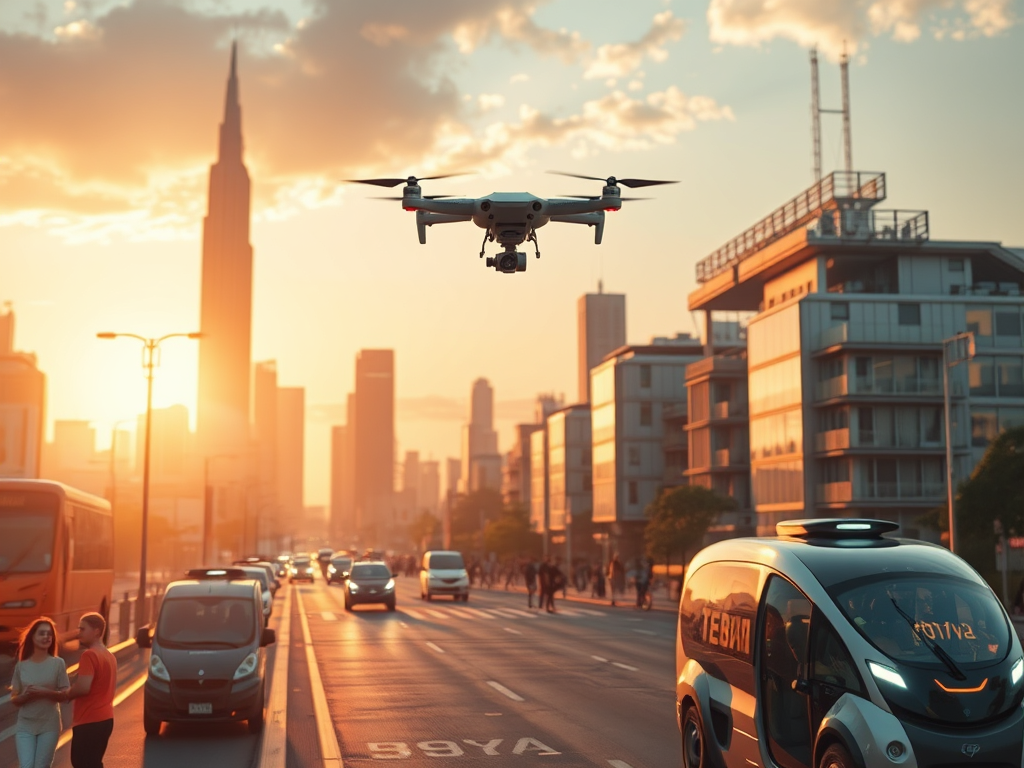
Today, Artificial Intelligence (AI) has emerged as a transformative technology, revolutionizing almost every aspect of our lives. From autonomous vehicles to personalized recommendations, AI is rapidly reshaping industries, economies, and societies worldwide. Like other technological advancements before it, this significant revolution brings both benefits and threats, as well as the potential to disrupt existing ecosystems. In this blog post, I will explore the positive impacts of AI, the potential risks it poses, and the possible disruption it may cause within different sectors of society.

It’s been said that the universal core value behind technological advancements is bringing equality to products and services and minimizing socioeconomic gaps among societies and people, thereby advancing human possibilities. That may be true; however, not all technological advancements are good. And to say otherwise would be an overstatement; the same can be said about all technological advancements being bad. The truth of the matter is that all technological advancements can be both inherently good and bad, and AI is no exception. To underscore this point, we’ll browse the annals of history to examine some miraculous and devastating impacts of technology in hopes of recognizing and avoiding similar outcomes with AI. During the final stages of World War II in 1945, the United States conducted atomic raids on the Japanese cities of Hiroshima and Nagasaki. The first was on August 6, 1945, and the second on August 9, 1945, killing 129,000 and 226,000 people, respectively. The bombs, nicknamed Little Boy and Fat Man, ended the war and secured victory for the Western Allies. But despite the horrific devastation, the atomic bombs were seen as a tremendous success by the Western Allies. Moral or immoral, you be the judge.

Despite your rationale, we can all agree that the universal core value behind technological advancements wasn’t adhered to – the advancement of human possibilities. Not convinced by this argument? Let’s examine another example. The printing press of the 1450s ushered in an era of transferred knowledge and the transmission of ideas across boundaries through the proliferation of books. It revolutionized the standardization of vernacular and increased the literacy rate. However, by the 1800th, racist sentiment led to the publication of false stories about African Americans’ supposed deficiencies and crimes. This resulted in the birth of the first fake news publication. Today, fake news is further proliferated through the use of the Internet and social media, gaining popularity from former US President Donald Trump. Here, the core value behind technological advancement to bring about equality in products and services and minimize socioeconomic gaps among societies was overshadowed by the bad-faith use of technology
To underscore my point, we’ll examine the third and final example. What started in the 1960th as a way for U.S. government researchers to share information led to the invention of Internet technology—a vast network that connects computers all over the world via the World Wide Web. Internet technology made it possible to access almost any information, communicate with anyone else in the world, and so much more. However, in 1986, a group of white supremacists used the internet to spread hate speech and propaganda against people of colour and minority groups, recruiting new members and organizing racist activities. This egregious act resulted in the first known report of bad-faith use of internet technology. Today, the internet is often used to spread misinformation, hate speech, and propaganda against people of colour and minority groups.
The underpinnings of these examples demonstrate the inherent good of technology while highlighting the perils associated with its bad-faith use. The finer point of all this is that the bad-faith use of technology is often employed to exploit and subjugate people, and more often than not, minority groups and people of colour are the ones who are at a disadvantage—something we have seen time and again when it comes to technology. This begs the question: Are we willing to allow this bad-faith use of AI to pollute our ethos? If we haven’t learned from our past, we are doomed to repeat the same mistakes.
Threading the Needle

Nothing exemplifies the transformation of the past years more than manufacturing. Once the bedrock of economic development, the manufacturing sector hired a large percentage of the job market, from the automobile and textile industries to the production of consumer electronics and chemicals. Today, 1.7 million manufacturing jobs worldwide have been lost to automation since 2000, and up to 20 million are expected to be lost by 2030. And manufacturing jobs aren’t alone in being furloughed; early predictions show AI could take over 52% of jobs globally. With no immediate solution in sight, government and business leaders worldwide are scrambling to find solutions to put the genie back in the bottle. The question now becomes: What happens next? Experts believe government regulations are needed in the form of safety, privacy, competition, and honesty to thread the needle with AI. To that end, let’s look at the benefits, threats, and disruption of AI to the ecosystem through a broader lens.

Benefits of AI
Automation and Efficiency: AI enables the automation of repetitive tasks, freeing up more human resources to focus on more creative and complex endeavours. This boasts industry efficiency and productivity, leading to cost savings and faster results.
Enhanced Decision-Making: AI-powered algorithms can analyze vast amounts of data and generate valuable insights, assisting humans in making more informed decisions. From healthcare diagnosis to financial forecasting, AI helps optimize decision-making processes.
Personalization and Customer Experience: AI algorithms can analyze user behaviour and preferences to deliver personalized experiences. This benefits businesses by improving customer satisfaction and engagement, leading to increased sales and loyalty.
Advancements in healthcare: AI has the potential to improve diagnosis accuracy, drug discovery, and personalized treatment plans. AI can analyze medical records, genetic data, and clinical research to enhance patient outcomes and reduce costs.
Increased Safety and Security: AI-powered technologies such as facial recognition, predictive analytics, and anomaly detection enhance security measures in various domains, including public safety, cybersecurity and fraud prevention.
Threats of AI
Job Displacement: As AI automates tasks previously performed by humans, there is a concern about job losses and the need for reskilling. Certain roles may become obsolete, requiring individuals to acquire new skills to remain relevant in the evolving job market.
Bias and ethics: AI systems are trained on data, which may contain biases and perpetuate discrimination. Without careful attention to date selection and algorithm design, AI can reinforce existing biases, leading to unfair outcomes and ethical dilemmas.
Security Risks: AI can be vulnerable to attacks, and malicious actors can exploit vulnerabilities in AI systems to cause harm. Adversarial attacks on AI-powered technologies, such as autonomous vehicles, pose risks to safety and security.
Lack of transparency and accountability: Complex AI algorithms often operate as black boxes, making it challenging to understand their decision-making processes. This lack of transparency raises concerns about accountability, especially in critical domains like healthcare and criminal justice.
Disruption in the Ecosystem
Employment landscape: The widespread adoption of AI may reshape the job market, leading to the creation of new roles and the transformation of existing ones. Sectors heavily reliant on manual labour may face significant disruptions, while new opportunities will emerge in AI development, data science, and AI ethics.
Industry Transformations: AI has the potential to disrupt entire industries by enabling new business models and approaches. Companies that embrace AI technologies and adapt to the changing landscape will gain a competitive advantage, while those that resist or fail to keep pace may struggle to survive.
Ethical and Legal Considerations: The rise of AI necessitates the development of new regulations and ethical frameworks to address the challenges it poses. Governments and organizations must collaborate to establish guidelines for responsible AI use, data privacy, and algorithmic transparency.
Socioeconomic Impact: The widespread adoption of AI may exacerbate existing societal divides, creating a digital divide between those who have access to AI technologies and those who do not. It is crucial to ensure equitable distribution and accessibility of AI tools to avoid further marginalization of vulnerable populations.
Conclusion
Like other technological advancements before, the AI revolution offers tremendous benefits, ranging from increased efficiency and personalization to advancements in healthcare and enhanced security. However, it also presents potential threats such as job displacement, biases and security risks. Disruptions in the ecosystem, including changes in employment, industry transformations, and ethical considerations, must be carefully addressed to maximize the positive impact of AI while mitigating the risks. By fostering collaboration between stakeholders, investing in education and re-skilling, and establishing robust ethical frameworks, we can navigate the AI revolution successfully and create a future that harnesses the full potential of this transformative technology. But this can only be achieved through government intervention in safety, privacy, competition and honesty. Only by coordinating action across all four will policymakers have any hope of reducing the potential harm that AI will bring.
Subscribe
Sign up for a weekly newsletter with the latest blog posts and exclusive content. In your inbox every Tuesday!
Citations for Disclaimer:
Encyclopædia Britannica, inc. (n.d.). History of technology timeline. Encyclopædia Britannica. https://www.britannica.com/story/history-of-technology-timeline Author links open overlay panelRoss Gruetzemacher a, a, b, Highlights•Advanced AI systems could have very large impacts on society without reaching human-level cognitive abilities.•We give 3 levels of AI’s societal impact: narrowly transformative AI, & AbstractThe terms ‘human-level artificial intelligence’ and ‘artificial general intelligence’ are widely used to refer to the possibility of advanced artificial intelligence (AI) with potentially extreme impacts on society. These terms are poorly defined. (2021, December 10). The transformative potential of artificial intelligence. Futures. https://www.sciencedirect.com/science/article/pii/S0016328721001932 Paterska, P., & EL Passion. (2021, November 26). Positive & negative impact of technology on Society. Custom Software Design & Development Agency – EL Passion. https://www.elpassion.com/blog/positive-negative-impact-of-tech-on-society. Khan Academy. (n.d.). The Atomic Bomb & The Manhattan Project (article) Khan Academy. https://www.khanacademy.org/humanities/us-history/rise-to-world-power/us-wwii/a/the-manhattan-project-and-the-atomic-bomb BBC. (2019, June 26). Robots “to replace up to 20 million factory jobs” by 2030. BBC News. https://www.bbc.com/news/business-48760799. Sofia Bliss-Carrascosa, J. C. (2023, June 21). What is Generative AI and why is it suddenly everywhere? here’s how tools like CHATGPT and dall-e work. Poynter. https://www.poynter.org/fact-checking/2023/what-is-generative-ai-and-why-is-it-suddenly-everywhere-heres-how-tools-like-chatgpt-and-dall-e-work/
Copyright 2023, All Rights Reserved Hopeton Andrew Bailey .
